

In our fast-paced world, quality sleep often feels like a luxury rather than a necessity. Yet, restorative rest is the cornerstone of a healthy, productive life, influencing everything from mental clarity to physical well-being. If you're tired of tossing and turning, you're in the right place. We're moving beyond generic advice to provide a comprehensive guide filled with actionable strategies that address the root causes of poor sleep. This list explores ten powerful ways to improve sleep quality, covering everything from your daily habits and lifestyle choices to creating the ultimate sleep sanctuary.
A key part of that sanctuary is your bed itself, and a tidy, inviting space can significantly reduce stress and prepare your mind for rest. Imagine coming home to a perfectly made bed every day without the fuss, a simple luxury that sets the stage for tranquility. Throughout these tips, we'll touch on how a streamlined environment, supported by innovations like the Cloudfit fitted comforter, can transform your bedroom from a source of chaos into a haven of calm. This unique fitted comforter makes tidying up effortless, helping you declutter and destress. This guide will help you build a routine that makes it easier than ever to unwind and achieve the deep sleep you deserve.
1. Declutter Your Mind and Bedroom for Ultimate Serenity
Your physical environment directly impacts your mental state, and a cluttered bedroom can subconsciously contribute to stress and anxiety. This "visual noise" makes it difficult for your mind to switch off, hindering one of the most foundational ways to improve sleep quality. A tidy, serene space signals to your brain that it's time to rest and unwind. A tidy clean bedroom makes you feel good when you come home.
The Connection Between Clutter and Stress
A disorganized room can feel like an unfinished to-do list, creating a low-grade mental load that follows you into bed. Studies in environmental psychology show that a clean, organized space promotes feelings of calm and control. The simple act of creating a sanctuary where you sleep reduces the sensory input your brain has to process, allowing for deeper relaxation.
Key Insight: A tidy room isn't just about aesthetics; it's a powerful tool for reducing the cognitive load that often keeps you awake at night.
Actionable Steps for a Clutter-Free Sanctuary:
- Implement a "One-Touch" Rule: If you pick something up, put it away immediately instead of setting it down to deal with later.
- Designate a "Clutter Basket": For busy days, toss miscellaneous items into a designated basket and commit to sorting it once a week.
- Simplify Your Bedding: The centerpiece of your bedroom is the bed itself. A messy bed creates immediate visual chaos. The Cloudfit fitted comforter is engineered to eliminate this problem. Its unique, all-in-one design stays perfectly in place, transforming bed-making into a seamless, one-pull action.
With the Cloudfit fitted comforter, your bed remains a consistent symbol of order and relaxation. It removes the daily struggle of tangled sheets and messy blankets, reinforcing the peaceful atmosphere your mind needs for truly restorative sleep. This effortless tidiness ensures your bedroom is always an inviting haven, ready to welcome you into a night of deep rest.
2. Optimize Your Sleep Environment
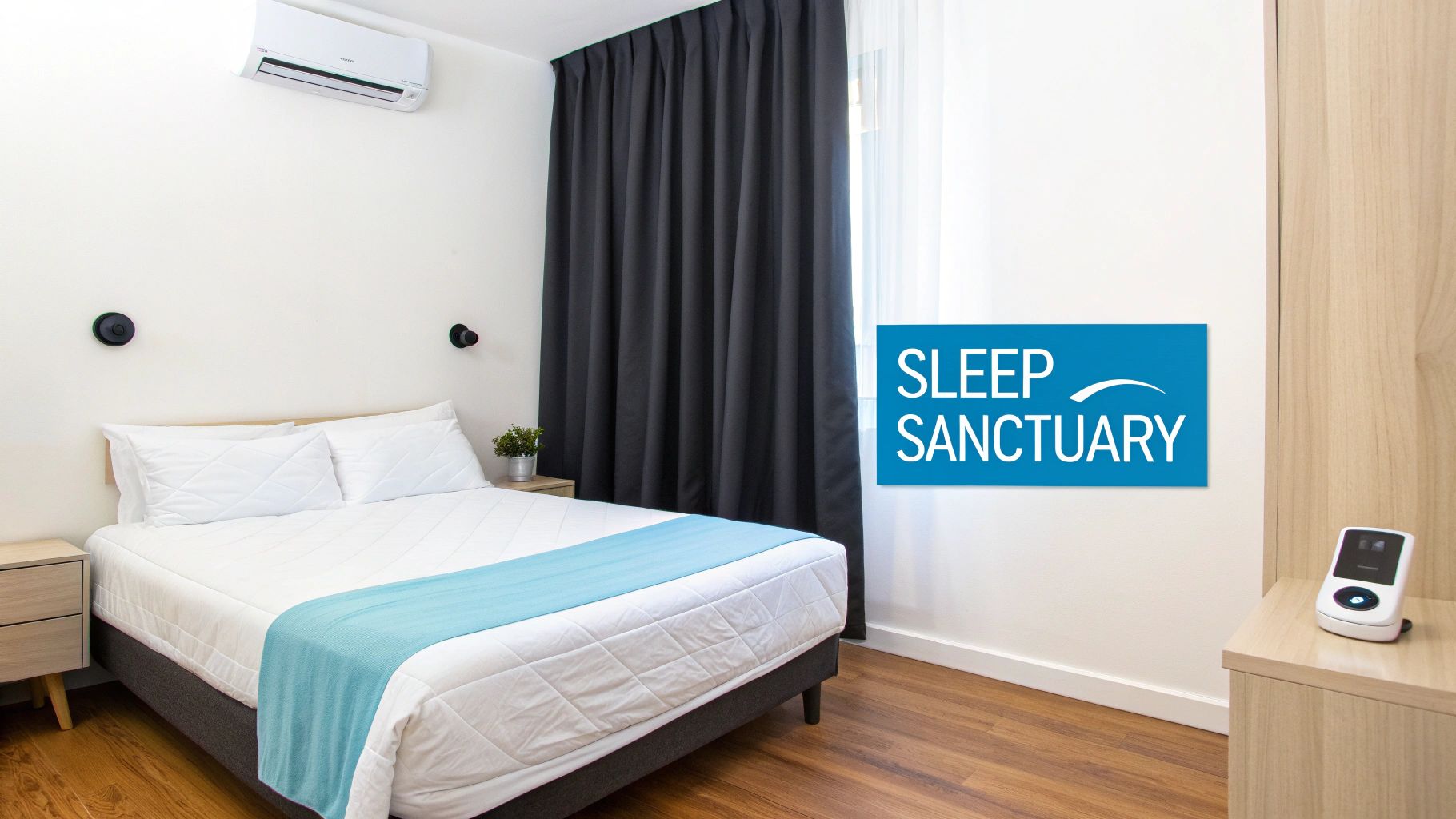
Your bedroom should be a sanctuary dedicated to rest, yet often it's filled with subtle disruptors like light, noise, and fluctuating temperatures. Optimizing your sleep environment is a critical way to improve sleep quality because it directly influences your body's natural sleep-wake cycle. A cool, dark, and quiet space signals to your brain that it's time to produce melatonin and transition into deep, restorative sleep.
The Connection Between Environment and Sleep Cycles
Environmental cues have a powerful effect on our circadian rhythm. Exposure to light, especially from electronics, suppresses melatonin production, making it harder to fall asleep. Similarly, a room that is too warm can interfere with the body's natural temperature drop required for deep sleep, leading to restlessness and frequent waking. Creating a consistent, controlled environment minimizes these disruptions.
Key Insight: Your bedroom's environment is not passive. It actively communicates with your brain, either promoting or inhibiting the biological processes necessary for high-quality sleep.
Actionable Steps for a Perfect Sleep Sanctuary:
- Master Darkness and Temperature: Use blackout curtains or a sleep mask to block all light. Set your thermostat between 60-67°F (15-19°C), the optimal range for sleep.
- Silence Distractions: Use a white noise machine or earplugs to mask disruptive sounds from traffic, neighbors, or household activity.
- Prioritize Foundational Comfort: Your bed is the centerpiece of your sleep environment. An uncomfortable or poorly made bed creates physical and mental unease. The Cloudfit fitted comforter is designed to enhance this core comfort. Its unique, one-piece construction eliminates shifting layers and bunching blankets that can disrupt sleep.
With the Cloudfit fitted comforter, your bed becomes a stable and inviting foundation for rest. It simplifies your environment by removing the fuss of traditional bedding, ensuring your sleep space remains a consistent source of comfort and tranquility, night after night.
3. Limit Screen Time Before Bed
In our hyper-connected world, scrolling through screens before sleep has become a common habit. However, this is one of the most disruptive ways to improve sleep quality, as the blue light emitted from phones, tablets, and computers directly interferes with your body's natural sleep-wake cycle. This artificial light signals to your brain that it's still daytime, suppressing the production of melatonin, the essential hormone for sleep.

The Connection Between Blue Light and Melatonin
Harvard sleep researchers have shown that blue light exposure at night can shift circadian rhythms by several hours. This hormonal disruption not only makes it harder to fall asleep but also reduces the quality of the sleep you do get. Beyond the light itself, the stimulating nature of social media, news, and emails keeps your mind actively engaged, preventing it from winding down into a restful state.
Key Insight: A digital curfew isn't just about avoiding light; it's about giving your mind the necessary space to transition from an active, engaged state to a calm, restorative one.
Actionable Steps for a Digital Sunset:
- Establish a "Screen-Free" Zone: Make your bedroom a no-device zone. If you must have your phone, place it across the room to avoid mindless scrolling in bed.
- Enable Night Mode: Most devices have a "night shift" or "blue light filter" setting that warms the screen's color. Schedule this to turn on automatically after sunset.
- Swap Digital for Analog: Replace your pre-sleep scrolling with a calming activity like reading a physical book, journaling, or light stretching.
This transition from screen to serenity is key. Instead of engaging with a bright, stimulating device, you can unwind in the comfort of your bed. The effortless order provided by the Cloudfit fitted comforter enhances this peaceful environment. Its always-tidy appearance eliminates distractions, making your bed a dedicated sanctuary for relaxation and deep, screen-free rest.
4. Practice Relaxation Techniques (Progressive Muscle Relaxation & Deep Breathing)
Anxiously watching the clock is a common hurdle to restful sleep, but you can actively calm your racing mind and body. Evidence-based relaxation methods are one of the most direct ways to improve sleep quality by signaling to your nervous system that it’s safe to power down. These practices consciously shift you from a state of high alert to one of deep rest.

Shifting from Fight-or-Flight to Rest-and-Digest
Techniques like deep breathing and progressive muscle relaxation (PMR) are designed to activate the parasympathetic nervous system, your body’s natural relaxation response. This process lowers your heart rate, reduces stress hormones like cortisol, and eases muscle tension. By doing so, you create the ideal physiological conditions for your body to transition smoothly into sleep.
Key Insight: Relaxation isn't a passive state; it's an active skill. Practicing these techniques trains your body and mind to unwind on command, making it easier to fall asleep when you need to.
Actionable Steps to Calm Your Nervous System:
- Try the 4-7-8 Breathing Method: Inhale through your nose for 4 seconds, hold your breath for 7 seconds, and exhale slowly through your mouth for 8 seconds. Repeat 3-4 times.
- Practice Progressive Muscle Relaxation (PMR): Systematically tense a muscle group (like your feet) for 5 seconds, then release the tension for 30 seconds. Work your way up your entire body.
- Create a Soothing Sleep Environment: Your surroundings should support your relaxation efforts. Sinking into an effortlessly tidy bed enhances the feeling of calm. The Cloudfit fitted comforter ensures your bed is always a welcoming, orderly retreat without the fuss of tangled top sheets, helping to quiet the mind.
Combining these practices with the comforting order of a well-made bed creates a powerful pre-sleep ritual. A bed made neat with the Cloudfit fitted comforter amplifies the mental benefits of your relaxation exercises, reinforcing that your bedroom is a dedicated sanctuary for rest.
5. Manage Caffeine and Alcohol Consumption
What you consume during the day, particularly in the afternoon and evening, plays a critical role in your ability to fall asleep and stay asleep. Both caffeine and alcohol are well-known culprits that disrupt natural sleep cycles, making their strategic management one of the most effective ways to improve sleep quality. While they affect the body differently, both can sabotage a night of restorative rest.
The Science of Sleep Disruption
Caffeine is a stimulant with a half-life of 5-6 hours, meaning it can linger in your system long after your last sip. It works by blocking adenosine, the brain chemical that promotes sleepiness. Alcohol, on the other hand, is a depressant that might make you feel drowsy initially, but it severely fragments sleep later in the night, preventing you from reaching deeper, more restorative sleep stages.
Key Insight: Thoughtful consumption isn't about total deprivation; it's about timing. Understanding how these substances interact with your body’s sleep mechanisms allows you to enjoy them without sacrificing rest.
Actionable Steps for Mindful Consumption:
- Set a Caffeine Curfew: Make a rule to stop all caffeine intake, including coffee, tea, and energy drinks, by 2 PM. This gives your body ample time to process the stimulant before bedtime.
- Create an Alcohol Buffer Zone: Limit alcoholic beverages to one or two drinks and finish them at least three hours before you plan to go to sleep.
- Find Soothing Swaps: In the evening, replace caffeinated or alcoholic drinks with calming herbal teas like chamomile or peppermint. This not only avoids disruptors but also creates a relaxing pre-sleep ritual that signals to your body it's time to wind down.
6. Regular Exercise and Physical Activity
Engaging in consistent physical activity is one of the most effective natural ways to improve sleep quality. Exercise enhances sleep by increasing the body's natural sleep drive, regulating your internal clock, and reducing stress hormones like cortisol. This physical exertion helps you fall asleep faster and achieve deeper, more restorative sleep stages throughout the night.
The Connection Between Movement and Rest
Physical activity elevates your core body temperature. The subsequent post-exercise cooldown signals to your brain that it's time to rest, promoting sleepiness. Exercise also helps synchronize your circadian rhythm, especially when done in the morning or afternoon, reinforcing your body’s natural sleep-wake cycle.
Key Insight: Consistent exercise doesn't just tire you out; it actively recalibrates the biological processes that govern deep, high-quality sleep.
Actionable Steps for Better Sleep Through Exercise:
- Time It Right: Aim to finish moderate to vigorous exercise at least 3-4 hours before bedtime to allow your body temperature and heart rate to return to normal.
- Aim for Consistency: The goal is at least 150 minutes of moderate activity, like brisk walking or cycling, per week. Consistency is more impactful than occasional high-intensity workouts.
- Simplify Your Recovery: A good night's sleep is crucial for muscle recovery. After a day of activity, an effortless and comfortable bed is essential. The Cloudfit fitted comforter simplifies your bedtime routine by staying perfectly in place, eliminating the hassle of tangled sheets.
With the Cloudfit fitted comforter, your bed is always a welcoming retreat for post-exercise recovery. Its secure, all-in-one design ensures you can settle in quickly, maximizing comfort and allowing your body to focus on the deep, restorative sleep it needs to repair and recharge.
7. Embrace Mindfulness and Sleep-Focused Meditation
Racing thoughts and late-night rumination are common culprits behind poor sleep. Mindfulness meditation offers a powerful technique to quiet this mental chatter, calming the brain and body to prepare for rest. It works by training your attention and awareness, which is one of the most effective ways to improve sleep quality by breaking the cycle of stress that keeps you awake.
The Connection Between Meditation and Rest
Meditation activates the parasympathetic nervous system, the body's "rest and digest" mode, which lowers heart rate and blood pressure. It also reduces activity in brain regions associated with worry. By consciously shifting your focus away from anxious thoughts and onto your breath or physical sensations, you create the mental space necessary for sleep to occur naturally.
Key Insight: Meditation doesn't empty your mind; it gives you the tools to observe your thoughts without getting caught up in them, creating a pathway to peaceful sleep.
Actionable Steps for a Calmer Mind:
- Start Small and Be Consistent: Begin with guided 5-10 minute sessions using apps like Calm or Insight Timer. Consistency is more important than duration.
- Try a Body Scan: Lie comfortably in bed and bring gentle, non-judgmental awareness to each part of your body, from your toes to your head. This grounds you in the present moment.
- Combine with Physical Comfort: The environment for meditation should be as serene as your mind. A bed that feels orderly and calm, like one made with the Cloudfit fitted comforter, enhances the experience.
The simple, all-in-one design of the Cloudfit fitted comforter creates a consistently neat and inviting sleep surface. This physical orderliness complements your mental practice, removing environmental distractions and making it easier to sink into a meditative state and, ultimately, a deep and restorative sleep.
8. Master the Art of Strategic Napping
While it may seem counterintuitive, a well-timed nap can be one of the most effective ways to improve sleep quality by reducing sleep debt and boosting daytime performance. A strategic nap isn't about lengthy, groggy slumbers; it's a precision tool designed to refresh your mind and body without interfering with your ability to fall asleep at night.
The Science Behind a Successful Nap
The key to a successful nap lies in its length and timing. Short "power naps" of 10-20 minutes primarily involve lighter stages of sleep, which are perfect for enhancing alertness and cognitive function without causing sleep inertia, that groggy feeling upon waking. Napping between 1 PM and 3 PM aligns with your body's natural circadian dip, making it an ideal time for a quick recharge.
Key Insight: A short, timed nap acts as a system reboot for your brain, clearing out sleep-inducing chemicals like adenosine and improving focus for the rest of the day.
Actionable Steps for the Perfect Power Nap:
- Time It Right: Aim for a 20-minute nap in the early afternoon to avoid disrupting your nighttime sleep schedule.
- Set an Alarm: Always use an alarm to prevent oversleeping and entering deep sleep cycles that lead to grogginess.
- Create a Restful Nook: Even for a quick nap, a comfortable environment matters. A cool, dark room is ideal. Using the Cloudfit fitted comforter for a quick nap ensures you have instant comfort without the hassle of arranging messy bedding. Its simple, all-in-one design makes it easy to quickly lie down and get comfortable, supporting your goal of immediate, high-quality rest.
By incorporating a brief nap into your routine, you can effectively manage daytime fatigue and enhance your overall energy levels, which contributes to a more consolidated and restorative sleep at night.
9. Optimize Light Exposure (Phototherapy)
Your body’s internal clock, or circadian rhythm, is powerfully influenced by light. Strategically managing your daily light exposure is one of the most effective ways to improve sleep quality by signaling to your brain when it's time to be alert and when to wind down. This process, known as phototherapy, uses light as a tool to regulate melatonin production and maintain a consistent sleep-wake cycle.
The Connection Between Light and Circadian Rhythm
Bright light exposure in the morning acts as a primary "zeitgeber," or time-giver, that advances your internal clock and suppresses melatonin, promoting daytime alertness. Conversely, dim, warm light in the evening allows melatonin levels to rise naturally, preparing your body for rest. Mismanaged light exposure, such as bright screens before bed, can disrupt this delicate balance and delay sleep onset.
Key Insight: Think of morning light as an "on" switch for your day and evening dimness as the "off" switch. Controlling this switch is fundamental to regulating your sleep patterns.
Actionable Steps for Light Optimization:
- Seek Morning Sunlight: Aim for 20-30 minutes of direct sunlight within the first hour of waking up. This can be as simple as a short walk or enjoying your coffee by a window.
- Use a Light Therapy Box: On darker days or for those with circadian rhythm disorders, a 10,000-lux light therapy box used for 20-30 minutes in the morning can be highly effective.
- Dim the Lights at Night: Two to three hours before bed, reduce your exposure to bright overhead lights. Use dimmer switches, lamps with warm-toned bulbs, or light-blocking curtains to create a sleep-conducive environment.
By controlling the light in your bedroom, you create an ideal setting for rest. Pairing this with the effortless order of the Cloudfit fitted comforter ensures your sanctuary is both visually and biologically optimized for sleep. Its always-tidy appearance complements a dimly lit, calm atmosphere, reinforcing your brain's signal that it is time for deep, restorative rest.
10. Dietary Adjustments and Sleep-Supporting Nutrients
What you eat and when you eat it can profoundly influence your sleep-wake cycle. Certain foods contain natural compounds like magnesium and tryptophan that calm the nervous system and promote the production of sleep hormones. Making strategic dietary choices is one of the most effective ways to improve sleep quality from the inside out.

The Connection Between Nutrition and Sleep
Foods rich in specific nutrients can either support or sabotage your rest. For example, tryptophan is an amino acid precursor to serotonin and melatonin, the key hormones that regulate sleep. Meanwhile, heavy, spicy, or high-fat meals can cause indigestion and disrupt sleep by forcing your digestive system to work overtime when it should be resting. Timing is also crucial, as eating a large meal too close to bedtime can interfere with your body's natural sleep processes.
Key Insight: Your diet is a powerful, non-pharmacological tool for enhancing sleep; think of your evening meal as the first step in your bedtime routine.
Actionable Steps for a Sleep-Friendly Diet:
- Time Your Last Meal: Aim to finish dinner at least two to three hours before you go to bed. This gives your body ample time to digest.
- Incorporate Sleep-Promoting Foods: Include sources of tryptophan (turkey, nuts), magnesium (leafy greens, seeds), and complex carbohydrates (oats, quinoa) in your evening meal to support melatonin production.
- Avoid Sleep Disruptors: Steer clear of caffeine, alcohol, and sugary or spicy foods in the hours leading up to bedtime, as they can interfere with sleep architecture.
- Consider a Soothing Beverage: A warm cup of chamomile or valerian root tea can have a mild sedative effect, helping you relax and prepare for rest.
Just as a balanced diet prepares your body for sleep, a well-made bed prepares your mind. The Cloudfit fitted comforter eliminates the fuss of messy bedding. Its all-in-one design ensures your bed is always neat, providing a consistently calm environment that complements your internal efforts to achieve deep, restorative sleep.
Your Journey to Better Sleep Starts Tonight
We've explored a comprehensive toolkit of ten distinct strategies designed to transform your sleep, but the real power lies not in any single tip, but in their synergy. Improving your sleep quality is a journey of small, intentional adjustments that accumulate into a profound shift in your well-being. It’s about building a holistic system where your daily habits, your environment, and your mindset all work in harmony to foster deep, restorative rest. From the disciplined consistency of a set sleep schedule to the mindful practice of meditation, each element plays a crucial role in silencing the noise of the day and preparing your body for recovery.
From Knowledge to Action: Your First Steps
The path to mastering these concepts is paved with consistency, not perfection. Instead of feeling overwhelmed by the need to implement all ten strategies at once, choose one or two that resonate most with your current lifestyle.
- If your evenings are chaotic: Focus on creating a digital sunset. Commit to putting screens away 60 minutes before bed and replace that time with a relaxation technique, like deep breathing exercises.
- If your mind races at night: Introduce a 10-minute mindfulness meditation practice into your evening routine. This simple habit can help you detach from anxious thoughts and create mental space for sleep.
- If your bedroom feels stressful: Start with decluttering. A tidy, organized space sends a powerful signal to your brain that it’s time to unwind. This principle of a calm environment extends directly to your bed itself.
The Ripple Effect of a Simplified Sleep Space
A core theme woven throughout these strategies is the reduction of friction and stress. A clean, inviting bedroom makes you feel good when you come home, and the centerpiece of that sanctuary is your bed. This is where a simple upgrade can have an outsized impact on your nightly routine. The innovative Cloudfit fitted comforter, for example, is designed to eliminate the daily struggle of making the bed. Its all-in-one design stays perfectly in place, ensuring your bed looks effortlessly neat from the moment you wake up.
This isn't just about aesthetics; it's about removing a small but persistent source of daily friction. That saved time and mental energy can be reinvested into other positive sleep habits, like stretching or journaling. By simplifying the core of your sleep environment, you create momentum. The ease of a self-making bed inspires a tidier room, which in turn fosters a calmer mind, making it one of the most practical ways to improve sleep quality you can implement immediately. Your journey to better sleep truly begins the moment you decide to take that first, small step. Start tonight.
Ready to simplify your sleep sanctuary and eliminate daily bedding hassles? Discover how the innovative Cloudfit fitted comforter can make your bed the most stress-free part of your day. Visit Cloudfit to transform your sleep environment tonight.