

How To Wash Duvet Cover: How To Wash Duvet Cover For Fresh, Clean Bedding
Washing a duvet cover is actually pretty simple. All you really have to do is take out the insert, glance at the care tag for any specific instructions, and toss it in the wash on a gentle cycle.
For most fabrics, cool or warm water with a mild detergent is the way to go. Tumble dry on low heat, and you’ll have a perfectly clean and fresh cover. Following this straightforward process is the key to keeping your bedding looking and feeling great.
Your Quick Guide To Washing A Duvet Cover
A clean duvet cover is about more than just looks—it’s a huge part of creating a healthy, hygienic place to sleep. The good news is that keeping it fresh doesn’t have to be a chore. With just a few simple steps, you can make sure your bedding stays clean, cozy, and in great shape for years.
Once you understand the basic process, there's no more guesswork involved. The main steps are always the same: separate the cover from the insert, check what the manufacturer recommends on the care label, and pick the right settings for your machine.
This simple workflow breaks down the core process perfectly.
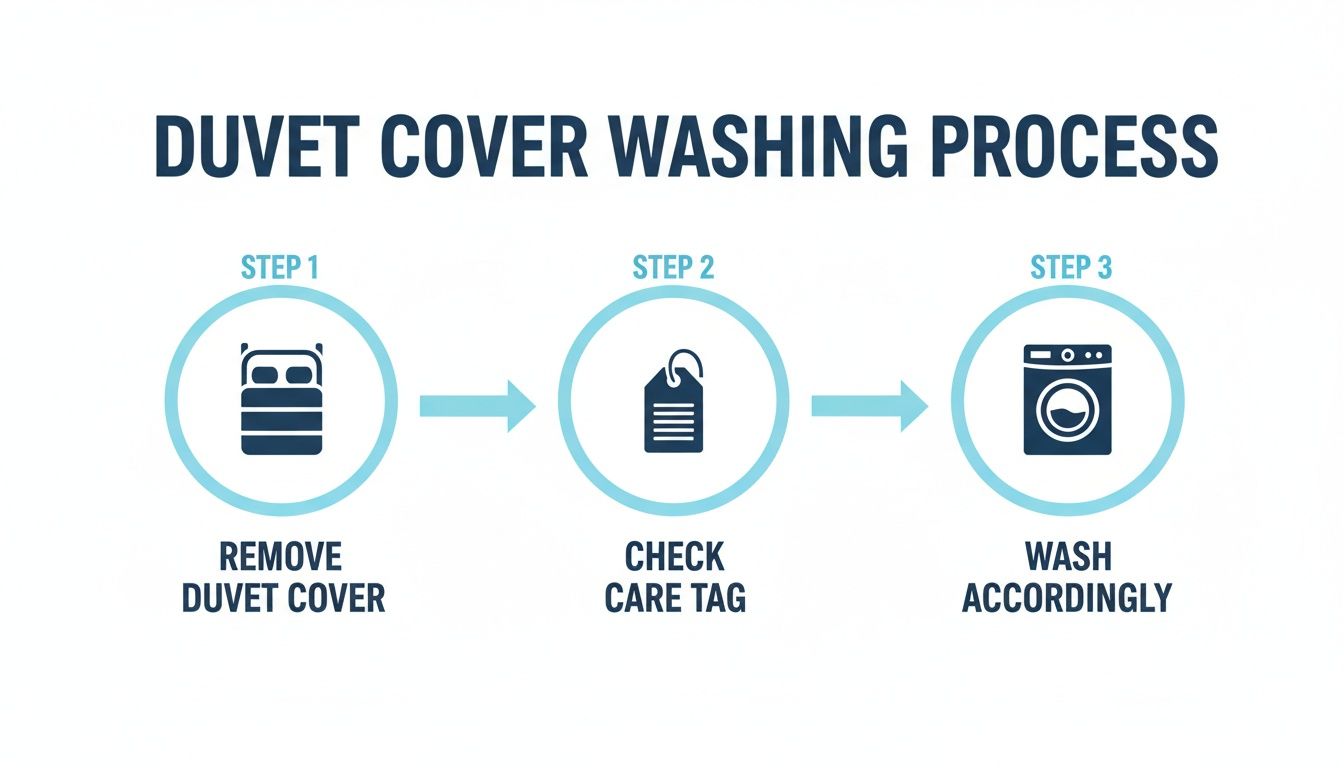
Just stick to these three actions—remove the insert, check the tag, and wash it right—and you’ve got the foundation of proper duvet cover care down.
The Importance of Regular Washing
Washing your duvet cover regularly is non-negotiable for good hygiene and for making your bedding last. Think about it: bedding can collect allergens and bacteria that affect a surprising number of people. In fact, these irritants contribute to allergy-related illnesses for about 20 million Americans every year.
By washing your duvet cover every one to two weeks, you can cut down your exposure to dust mites by up to 50%. You can learn more about how much bedding hygiene really matters by exploring the science of sleep and why comfort matters.
A consistent washing routine does more than just keep your bedding looking and smelling fresh. It creates a healthier space for truly restorative sleep, free from the allergens that can disrupt it.
Proper care also has a direct impact on how long your duvet cover lasts. Following the right steps helps prevent fabric damage, shrinking, and fading, making sure you get the most out of your investment. This simple habit protects both your health and your favorite bedding.
Quick Washing Guide for Common Duvet Cover Fabrics
Different materials need slightly different care to stay in top condition. Using the wrong water temperature or dryer setting can cause anything from shrinking to fading.
Here is a quick rundown of the best settings for the most common duvet cover fabrics:
- Cotton: Warm or Cold Water, Mild/All-Purpose Detergent, Low to Medium Heat Dryer
- Linen: Cold Water, Mild Detergent, Low Heat or Air Dry
- Microfiber: Warm or Cold Water, Mild Detergent, Low Heat Dryer
- Silk: Cold (Hand-wash), Gentle/Silk-Safe Detergent, Air Dry (No Sun)
- Bamboo: Cold Water, Mild/Eco-Friendly Detergent, Low Heat or Air Dry
- Flannel: Warm Water, Mild Detergent, Low Heat Dryer
Sticking to these guidelines will help ensure your duvet cover comes out of the laundry clean, soft, and ready for another cozy night's sleep.
Prepping Your Duvet Cover For The Wash
The secret to a perfectly clean duvet cover doesn't start in the washing machine—it starts a few minutes before. Taking a moment to prep your cover can mean the difference between a good wash and a great one, preventing damage and keeping colors from fading.
First things first, get that duvet insert out. Unbutton, unzip, or untie the cover and separate the two. This is a non-negotiable step. It allows both pieces to get properly cleaned and stops the insert from bunching up, which can put a ton of strain on the cover's seams during the wash cycle.
Decode The Care Label
Before you do anything else, find that little tag with the care instructions. It’s your roadmap, packed with tiny symbols that tell you exactly what your duvet cover needs.
- The Wash Tub Symbol: This is all about water temperature. One dot means cold, two dots mean warm, and three dots mean hot. A hand dipping into the tub? That means hand-wash only.
- The Triangle Symbol: Your guide to bleach. An empty triangle means you're good to go with regular bleach. If it has diagonal lines, stick to non-chlorine bleach. A big "X" through it means no bleach, period.
- The Square Symbol: This one is for drying. A circle inside the square tells you it’s safe for the tumble dryer. Just like the wash tub, the dots will tell you the heat level (one for low, two for medium, etc.).
Ignoring these symbols is a classic mistake. Using hot water on a cover that’s meant for cold can lead to shrinking and fading before you know it.
Handle Stains And Protect Your Cover
Next, give the cover a quick once-over for any stains. Tackling them before the wash makes a huge difference. For everyday culprits like coffee or makeup, you can pre-treat the spot with a dab of mild liquid detergent or even a simple paste of baking soda and water. Just let it sit for about 15-30 minutes before you toss it in the wash.
Pro Tip: Always turn your duvet cover inside out before washing. This one simple move protects the outer fabric from friction, keeping the colors vibrant and the material looking new for way longer.
Finally, close all the fasteners—buttons, zippers, or ties. This little step is a lifesaver, preventing them from snagging on the fabric and causing rips or tears. Smart bedding care can really simplify your routine. And if you're all about streamlining your mornings, you can see how fitted comforters simplify your morning routine. A few prep steps now will set you up for a flawless wash every single time.
The Best Machine Washing Method For Duvet Covers
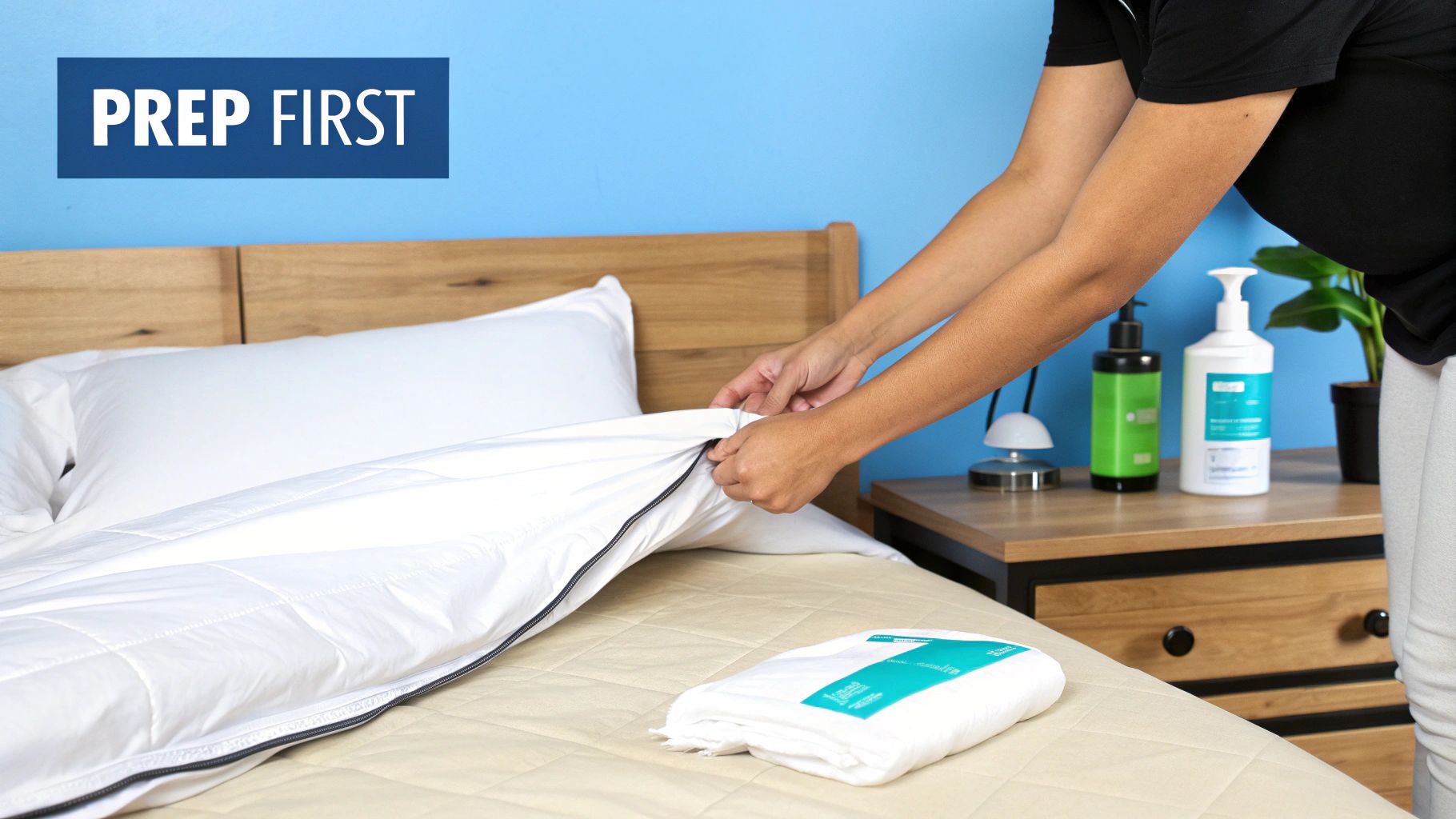
Alright, with your duvet cover prepped and ready to go, the machine wash itself is pretty simple. The biggest mistake I see people make is cramming the washing machine too full. Your duvet cover needs space to tumble around freely to get completely clean.
If the drum is overloaded, water and detergent can't circulate properly, which often leads to dry spots and a not-so-fresh result. For the best outcome, wash the cover by itself or with just a few similar lightweight items, like its matching pillowcases.
Selecting The Right Cycle And Temperature
Take a look at your machine's settings and find the gentle or delicates cycle. This is almost always the right choice. These cycles use slower spin speeds and less aggressive agitation, which is exactly what you want to protect the fabric, seams, and any closures like zippers or buttons from damage.
As for the water temperature, it really comes down to the fabric type and what you're trying to accomplish. Here’s a quick rundown:
- Cold Water: Perfect for delicate fabrics like silk or for anything with vibrant colors you don't want to fade. It’s also great for lightly soiled covers.
- Warm Water (around 100°F/38°C): This is the sweet spot for most durable fabrics like cotton and microfiber. It cleans effectively without being too harsh.
- Hot Water (140°F/60°C): Save this for white cotton covers, especially if someone in the house has been sick or you’re battling allergies. The high heat is fantastic for killing off bacteria and dust mites.
When in doubt, check the care label, but warm water is a safe bet for the vast majority of modern duvet covers.
It's no surprise that machine-washable bedding is a top priority for so many people. The global duvet covers market, valued at about USD 5.23 billion in 2024, is growing fast, largely because we all prefer durable, easy-care fabrics. In fact, an estimated 75% of duvet covers on the market are designed for machine washing, which says a lot about our need for convenience. You can learn more about these duvet cover market trends and consumer preferences.
Detergent Choice And The Extra Rinse
The detergent you choose—and how much you use—makes a big difference. A mild liquid detergent is your best friend here. Powdered detergents can sometimes leave behind a chalky residue if they don't dissolve all the way, especially in a cold wash.
And resist the temptation to add extra soap! More detergent doesn't mean a cleaner cover. It just creates a mountain of suds that are tough to rinse out completely, leaving behind a residue that can make your fabric feel stiff and even irritate sensitive skin.
If you want to be extra sure all the soap is gone, use your machine's extra rinse cycle. I always recommend this for people with sensitive skin or allergies. It ensures every last bit of detergent is washed away, leaving you with a truly clean, soft duvet cover that’s ready for a great night's sleep.
Drying Your Duvet Cover for a Wrinkle-Free Finish

The journey to a perfectly clean duvet cover doesn't end when the wash cycle chimes. How you dry it is just as critical for getting that soft, unwrinkled finish that makes crawling into bed feel so good. The right drying method can prevent shrinkage, protect the fabric for the long haul, and get your bedding ready for a cozy night's sleep.
Let’s get into the two best ways to do it: machine drying and air drying. Each has its perks, and the best choice often comes down to your cover’s fabric and how much time you have. With a couple of simple tricks, you can completely avoid that stiff, wrinkled mess.
Perfecting The Machine Dry Method
Using a machine is fast and effective, but the real key is to be gentle. High heat is the enemy of most fabrics—it’s the fast track to shrinkage and unnecessary wear and tear. Always, always opt for a low to medium heat setting on your dryer to keep your cover in pristine condition.
Want to take your drying game to the next level? Toss in a few wool dryer balls. They are a fantastic, natural alternative to dryer sheets.
- They fluff the fabric: As they tumble around, the balls create space between the layers of the cover, letting warm air circulate more efficiently.
- They reduce wrinkles: That separation prevents the fabric from twisting into a wrinkled knot.
- They shorten drying time: Better airflow means your cover dries faster, which saves energy and is easier on the material.
A Game-Changing Tip: To stop your cover from turning into a tangled, damp bundle, pull it out of the dryer about halfway through the cycle. Give it a good, solid shake to redistribute the fabric before tossing it back in. This one simple step makes a huge difference in how evenly it dries and how soft it feels.
The Benefits Of Air Drying
If you’ve got the time and space, air drying is the gentlest method of all. It’s the ultimate way to preserve the color and integrity of the fabric, helping your duvet cover last so much longer.
For the absolute best results, hang the cover on an outdoor clothesline where it can catch a breeze. If you're drying it inside, drape it over a large drying rack and spread it out as much as possible to maximize airflow. Good circulation is what stops any musty smells from developing while it dries.
Once it's dry—but maybe still a little wrinkled—you can give it a quick press with an iron on the right setting for the fabric. An even easier fix? Just put it back on the duvet. The weight of the insert will naturally smooth out most of the minor creases over a day or two.
Finally, getting the duvet back inside the cover doesn't have to be a workout. Try the famous "burrito method" to make it quick and painless, leaving you with a perfectly made bed.
Handling Special Care For Different Materials

Not all duvet covers are created equal, and the secret to keeping them looking great for years is knowing exactly what the fabric needs. A durable cotton cover can handle a much different wash cycle than a delicate silk one, and getting it wrong is a fast track to shrinking, fading, or ruining the texture.
For instance, breathable cotton can usually handle warm water, making it fantastic for a deep, hygienic clean. A luxurious linen cover, on the other hand, actually gets softer with every wash but prefers cold water to keep its fibers from weakening over time.
This attention to detail is why professional cleaning for bulky bedding is becoming so popular. In fact, the duvet cleaning market is projected to expand by a whopping 39.6% between 2025 and 2030. While washing at home in cooler temps is often best for the fabric, it might not always be enough to tackle deep-set allergens. You can see how the demand for professional duvet cleaning is growing for yourself.
Washing Common Duvet Cover Fabrics
Knowing how to wash your duvet cover starts with its material. Each fabric has its own personality, and you’ll want to follow its specific care routine to maintain that unique feel and vibrant color.
- Cotton: This popular choice is pretty resilient. Use a warm or cold cycle with a mild detergent, then tumble dry on low to medium heat. Simple as that.
- Linen: To protect its beautiful natural fibers, wash linen in cold water on a gentle cycle. Tumble dry on low, or even better, let it air dry to keep wrinkles to a minimum.
- Microfiber: Much like cotton, microfiber does well in warm or cold water. Since it's a synthetic material, you’ll want to stick to a low heat setting in the dryer to avoid any damage. Many modern bedding solutions, including the Cloudfit fitted comforter, use high-quality microfiber for its incredible softness and easy-care benefits.
Caring For Delicate Embellishments
But what if your duvet cover has special features like embroidery, lace, or some decorative trim? These little details require an even gentler touch to prevent them from snagging or unraveling in the wash.
The best practice for embellished covers is to turn them inside out before washing. This little trick creates a protective barrier for the delicate details against the friction of the machine's drum.
Always use a gentle or hand-wash cycle with cold water for these items. For an extra layer of protection, you can also pop the cover inside a large mesh laundry bag before it goes into the machine.
How Often You Should Really Wash Your Duvet Cover
Let’s be honest, figuring out the right laundry schedule for your duvet cover isn't always straightforward. It's not just about when it looks dirty. Your duvet cover is the first line of defense for your comforter, but it’s also what you're snuggled up against every single night.
Night after night, it absorbs everything—body oils, sweat, and dead skin cells. That buildup, while totally normal, creates a perfect playground for dust mites and other allergens. Because of this, the expert-backed advice is to wash your duvet cover every one to two weeks, right along with your sheets and pillowcases.
When to Wash It More Often
That "one-to-two-week" rule is a great starting point, but it's not one-size-fits-all. Your lifestyle plays a huge role in how quickly your bedding needs a refresh. Think of it less as a strict rule and more as a baseline.
You’ll want to move your duvet cover to a weekly wash schedule if any of these sound familiar:
- You have a furry bedmate. We love our pets, but they bring dander, hair, and whatever they’ve rolled around in into your bed. A more frequent wash is a must.
- Allergies or asthma are a concern. Washing your cover weekly in warm or hot water is your best defense against dust mites and other triggers that can ruin a good night's sleep.
- Someone's been sick. When you're on the mend, washing bedding helps kick germs to the curb and keeps them from sticking around.
- You're a hot sleeper. If you tend to sweat at night, more frequent washing is key to keeping moisture and bacteria in check.
And what about the growing trend of skipping the top sheet? If you're part of the no-top-sheet club, your duvet cover is now pulling double duty. That means it absolutely needs to be washed weekly, no exceptions. You can read more about why younger generations are ditching top sheets and how innovative bedding is adapting.
A consistent washing routine is more than just about cleanliness—it's a core part of sleep hygiene that has a real impact on your health and how rested you feel.
Keeping It Fresh Between Washes
Even with a solid laundry routine, you can do a few things to keep your duvet cover feeling fresh all week long.
One of the best habits to get into is folding your duvet back every morning for at least 30 minutes. This simple move airs everything out and lets any moisture from the night evaporate, making your bed a less inviting place for dust mites.
Giving your duvet a good, vigorous shake each day also helps. It only takes a few seconds but works wonders to dislodge any dust or particles that have settled. These little tricks won't replace a real wash, but they absolutely help keep your bed feeling clean and inviting until laundry day.
Common Questions About Washing Duvet Covers
Even with a step-by-step guide, a few questions always seem to come up when it's time to wash a duvet cover. Let's clear up some of the most common uncertainties so you can tackle laundry day with total confidence.
One of the biggest questions is whether you can wash a duvet cover with other things. While it’s tempting to throw everything in together, it’s best to wash it alone or with other lightweight bedding in similar colors. Tossing it in with heavy items like jeans or towels is a recipe for tangling, uneven cleaning, and potential damage to the fabric or its buttons and zippers.
Troubleshooting Common Issues
Another frequent worry is how to handle wrinkles. If your duvet cover comes out of the dryer looking a little creased, don't sweat it. The easiest fix is to pull it out while it's still slightly damp and put it directly back on the comforter. Gravity will do most of the smoothing for you as it finishes air-drying.
For any stubborn wrinkles that stick around, a quick tumble on low heat for 10-15 minutes with a couple of wool dryer balls or a clean, damp towel usually does the trick.
The easiest way to get your duvet back into its cover without a struggle is the 'burrito method.' Turn the cover inside out, lay your comforter on top, roll them together, then tuck and unroll. It works perfectly almost every time.
Finally, people often wonder what's better: air drying or machine drying? Honestly, both are great options. Air drying is the gentlest on your fabric, helping preserve its color and extend its life. On the other hand, machine drying on a low-heat setting is faster and can leave the fabric feeling wonderfully soft. The best method really just depends on your fabric type and your schedule.
For more detailed answers to all your bedding questions, you can always check out our comprehensive FAQs page.
With a Cloudfit fitted comforter, you can simplify your routine even further. Its all-in-one design is fully machine washable, so you can ditch the separate cover without giving up that fresh, clean feeling. Make your bed in seconds and enjoy effortless comfort.
Article created using Outrank