

The Delicate Wash Cycle: A Complete Guide To Cleaning Your Comforter
Ever find yourself staring at your washing machine, wondering what the "delicate" button actually does? It’s not just for lace and silk anymore. The delicate cycle is your secret weapon for keeping sensitive fabrics—like your Cloudfit comforter—looking and feeling brand new.
Think of it as the machine equivalent of hand-washing.
What Is The Delicate Wash Cycle
This specialized setting is engineered to be gentle, combining a few key elements to protect fabrics from stretching, shrinking, or getting damaged. For something like a Cloudfit comforter, using this cycle is non-negotiable if you want to protect its softness and shape.
The Mechanics of a Gentle Clean
So, what’s happening inside the drum? It really comes down to three things:
First, the agitation is turned way down. Instead of the aggressive tumbling you get with a normal cycle, the delicate setting uses a slow, gentle swishing motion. This prevents the fabric fibers from being pulled, snagged, or stressed, which is exactly what keeps your comforter feeling soft and intact wash after wash.
Next, the water temperature is cool. Hot water is the enemy of many modern fabrics; it can cause colors to fade and materials to shrink or lose their shape. The delicate cycle sticks to cold or cool water, which cleans effectively without the risk of heat damage. This is super important for protecting the Oeko-Tex certified microfiber of your Cloudfit.
Finally, the spin speed is much slower. A fast, aggressive spin cycle can wring out your comforter so hard that it creates deep-set wrinkles and can even cause the fill to clump up. A slow spin gently presses the water out, protecting the lofty fill inside and helping it stay evenly distributed.
This gentle approach isn’t just about cleaning—it's about preserving your investment. Proper care keeps your comforter looking great and feeling cozy, which is a huge part of getting a better night's sleep.
As washing machines have gotten more advanced, this cycle has become essential. In fact, delicate cycles now account for about 12-15% of all laundry loads in modern households, a testament to how we care for our clothes and bedding today. You can see the full breakdown in a study from Electrolux.
Understanding how this cycle works is the first step to better bedding care. And as we know, better bedding leads to better rest—you can learn more about the science of sleep in our article on why comfort is so crucial.
Delicate Cycle vs Normal Cycle At A Glance
It’s easy to see the difference when you put them side-by-side. The delicate cycle is all about preservation, while the normal cycle is built for heavy-duty cleaning.
Delicate Wash Cycle
- Agitation: Slow & gentle
- Water Temp: Cold or Cool
- Spin Speed: Slow
Normal Wash Cycle
- Agitation: Fast & vigorous
- Water Temp: Warm or Hot
- Spin Speed: Fast
Ultimately, choosing the right cycle comes down to what you're washing. For durable items like towels or jeans, the normal cycle is perfect. But for your Cloudfit comforter, the delicate cycle is the only way to go.
Getting Your Comforter Ready for a Delicate Wash
The secret to a great wash happens before your comforter ever sees the inside of the machine. Taking a few minutes to prep it properly can make all the difference, preventing damage and keeping it looking and feeling its best. This is especially true for something like the Cloudfit fitted comforter, where a little extra care protects its unique design.
First things first, give it a quick once-over. Lay your comforter out somewhere with good light and check for any small rips, loose threads, or seams that look a little weak. Even the gentlest cycle can turn a tiny hole into a major tear, and nobody wants to deal with a washer full of filling.
A simple needle and thread is your best friend here. Mending those little spots beforehand is one of the smartest things you can do to make your bedding last.
Tackle Stains Before They Set
After your inspection, it's time to deal with any stains. If you wash a comforter with a stain on it, the heat and water can lock it in for good. We're talking about the usual suspects: coffee spills, sweat, or body oils that build up over time.
For most of these, a gentle, enzyme-based stain remover works wonders. These products are great because they break down the proteins in the stain without using harsh chemicals that can damage the fabric.
Just apply a small amount right on the spot. Instead of scrubbing—which can fray the fibers—gently dab the area with a clean cloth. Dabbing helps lift the stain out of the fabric.
Let the stain remover sit for about 15-20 minutes before washing. That gives the enzymes enough time to do their job.
Check the Tag and Your Machine
Okay, last step before you load it in. Always take a second to read the care label. Think of it as the manufacturer's official guide—it’ll tell you everything you need to know about water temperature and drying, and it will confirm that the delicate wash cycle is the right move.
It’s just as important to size up your washing machine. A comforter needs room to tumble and get clean. If you find yourself stuffing it in, your machine is probably too small. Overloading not only strains your washer but also means your comforter won't wash or rinse properly, often leaving behind gross detergent residue. As a rule of thumb, it should only fill about three-quarters of the drum.
Selecting The Right Detergent and Machine Settings
Okay, your comforter is prepped and ready to go. Now comes the part that really protects your bedding for the long haul: dialing in the right machine settings and picking the perfect detergent. Getting this right is what keeps your Cloudfit feeling soft and looking great wash after wash.
First things first, find the delicate wash cycle on your machine. Sometimes it’s called "gentle" or "hand wash," but they all do the same thing—give your comforter a much kinder, less aggressive cleaning.
Always, and I mean always, pair this with cold water.
Cold water is your best friend here. It gets the job done without any risk of shrinking the fabric or breaking down those soft fibers over time. It’s the only way to go for the Oeko-Tex certified materials in your comforter.
Choosing a Gentle Detergent
Not all detergents play nice with delicate fabrics. For something like this, you’ll want to grab a mild, pH-neutral liquid detergent. The liquid kind is key because it dissolves completely in cold water, so you won’t get any of that gritty residue powders can sometimes leave behind.
Powders tend to clump up in cold washes, and those clumps can leave deposits that make the fabric feel less soft and might even irritate your skin. A gentle liquid rinses clean and keeps your comforter feeling exactly how it should.
Interestingly, the entire laundry care market is shifting this way, with projections showing it’ll hit $144.3 billion by 2030. That growth is all about creating smarter detergents for sensitive fabrics, and liquids are leading the pack. If you want to dive deeper, you can discover more insights about laundry care market trends.
Quick but important tip: Never, ever use bleach or any other harsh chemical additives. They will cause irreversible damage, breaking down the microfiber and leaving discolored patches. A simple, mild detergent is all you need.
Before you even touch the dial, a little prep goes a long way. This simple checklist covers the basics to make sure your comforter is truly ready for its wash.
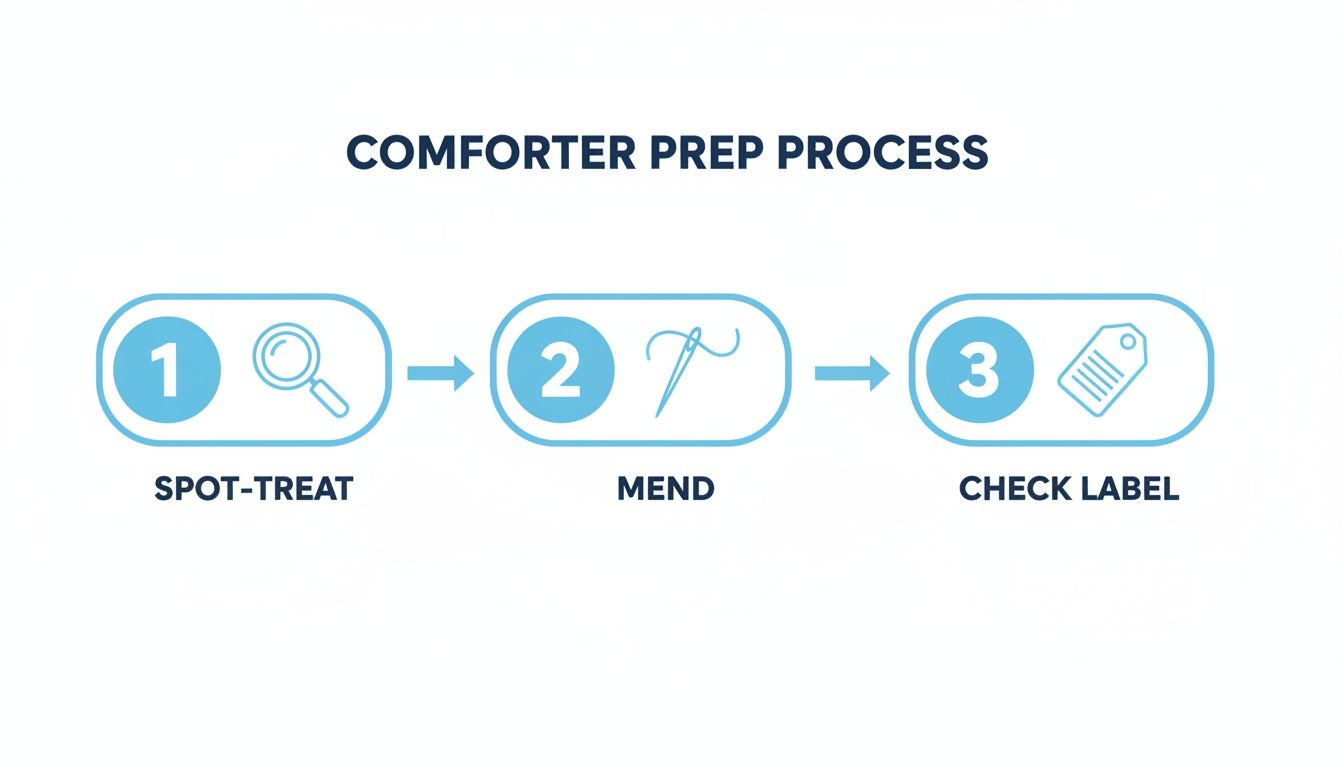
Running through these steps helps you catch potential issues—like a small tear that could get worse or a stain that might set—before they become big problems.
Finalizing Your Wash Settings
Once your detergent is in, there's just one last thing to check: the spin speed. Just like the delicate cycle is gentle on agitation, you want to be gentle on the spin. Go with the lowest spin speed your machine offers.
A high-speed spin cycle can be way too aggressive, wringing out the comforter so hard that it causes the filling to clump up. It also creates deep wrinkles that are a real pain to get out later.
So, here’s your go-to formula for every wash:
- Cycle Selection: Stick to "Delicate," "Gentle," or "Hand Wash."
- Water Temperature: Cold water only. No exceptions.
- Spin Speed: The lowest setting you’ve got.
Using this combination every single time creates the perfect, gentle environment for your comforter. It’s a simple routine that protects your investment and ensures your bedding stays soft, fluffy, and in perfect shape for years.
Figuring Out Your Machine's Limits and Balancing the Load
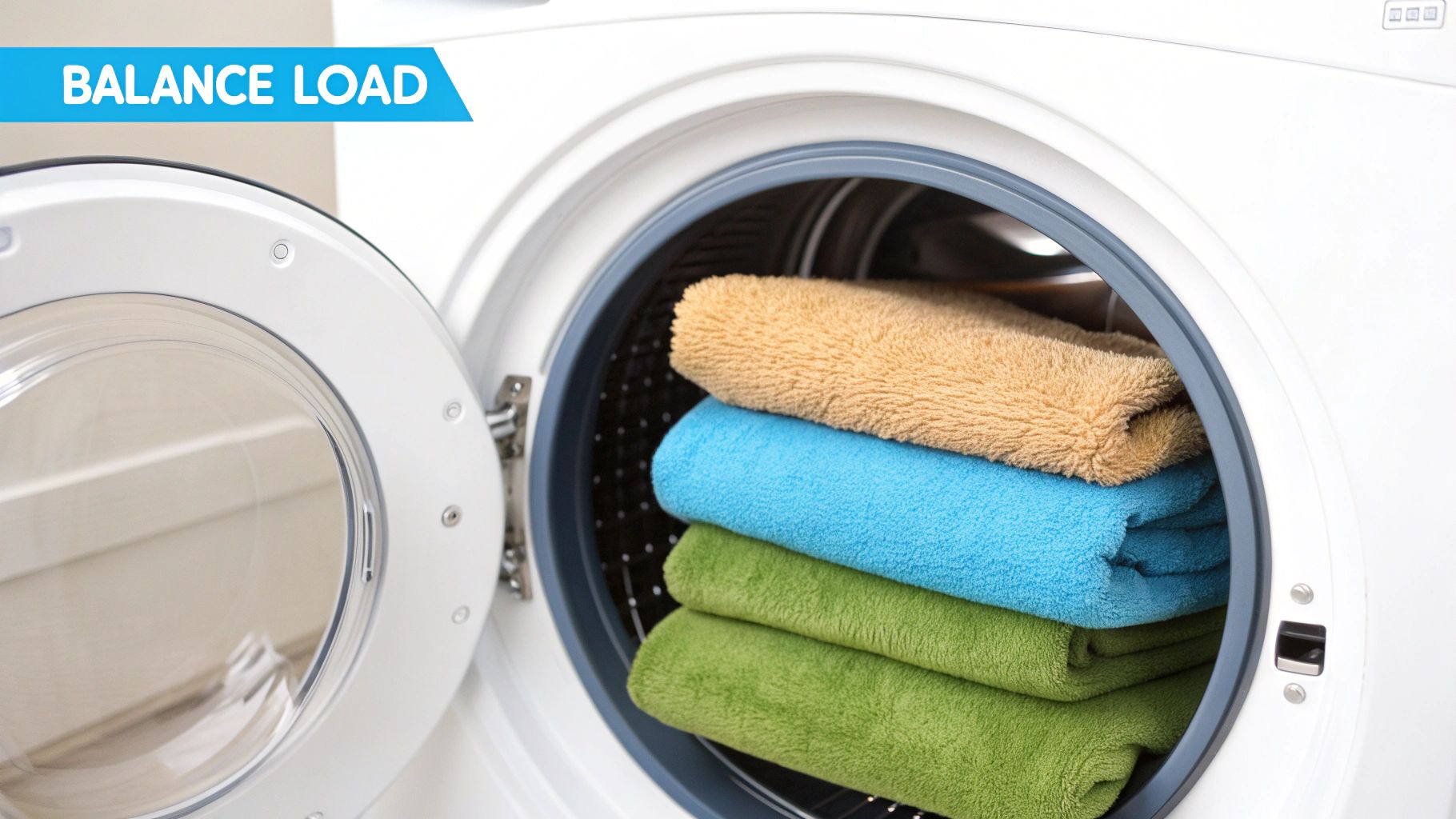
Washing a big, fluffy comforter isn't as simple as just tossing it in and hitting "start." Its size alone creates a real challenge. For a safe and effective wash, you have to nail two things: making sure your machine is big enough and balancing the load correctly.
An overloaded washer is a recipe for a bad cleaning. There's just no room for water and soap to get everywhere they need to go. Even worse, it puts a ton of strain on the machine's motor and drum, which can lead to some seriously expensive repairs. Even on a gentle delicate wash cycle, your comforter needs plenty of space to tumble.
Is Your Home Washer Up for the Job?
First things first, take an honest look at your washing machine. If you’ve got a queen or king-sized comforter, you’ll almost certainly need a high-capacity, front-loading machine. As a rule of thumb, look for a drum that’s 4.5 cubic feet or larger.
Here’s an easy way to check: try placing your comforter inside the drum without shoving it. If it takes up more than 75% of the space, the machine is probably too small. Don’t risk it. Your best move is to head to a local laundromat with those big, industrial-sized machines.
Trying to cram a huge comforter into a standard washer can end in disaster. Not only will it come out poorly washed, but you could cause the machine to shake violently or just stop working mid-cycle, potentially wrecking its internal parts.
The global washing machine market is now valued at around $61.6 billion, with a major focus on features like the delicate cycle. Modern machines, especially front-loaders which make up over 56.2% of commercial sales, are built with fabric care in mind. You can dive deeper into the trends in this in-depth analysis of the washing machine market.
The Art of a Balanced Wash
Once you know your machine can handle the size, the next critical step is loading it properly. Ever had a washer that sounded like it was trying to escape your laundry room? An unbalanced load is almost always the culprit.
Don't just stuff the comforter in. Take a moment to distribute its weight as evenly as you can around the drum. One great technique is to gently push it in, forming a sort of doughnut shape with a hole in the middle. This helps water get to the very center and stops the whole thing from shifting to one side during the spin. A well-balanced load is especially vital for a larger item like the Cloudfit King fitted comforter.
Want a pro tip for a perfectly balanced wash every single time?
- Toss in a few counterweights: Add two or three clean bath towels to the load.
- Place them strategically: Don’t just throw them in on one side. Distribute them evenly around the comforter.
- See the difference: These towels do more than just balance the weight; they also help the water circulate, giving you a much better clean.
This simple trick keeps your comforter from turning into one massive, waterlogged lump, making for a quieter, smoother wash from start to finish.
Drying Your Comforter Without Clumps or Heat Damage
 Getting the delicate wash cycle right is only half the battle. How you dry your comforter is just as crucial for preserving its life and loft. The wrong move here can lead to a lumpy, misshapen mess—or worse, permanently damage the fill.
Nailing this final step is what ensures your comforter comes out as fluffy and inviting as it was before the wash.
High heat is the number one enemy of synthetic microfiber fills like the one in your Cloudfit. Excessive temperatures can actually cause the delicate fibers to melt and fuse together. This creates permanent clumps that ruin the comforter's cozy texture and warmth.
That's why you absolutely must avoid standard heat settings.
Mastering Machine Drying
When it comes to machine drying, the golden rule is low and slow.
Select the lowest possible heat setting on your dryer. This is usually labeled ‘delicate,’ ‘low,’ or ‘air fluff.’ The ‘air fluff’ option is the absolute safest choice since it uses no heat at all, though it will definitely take longer.
This gentle approach prevents heat damage and gives the fill time to dry out evenly without clumping up. A little patience here pays off big time with a perfectly dried, lump-free comforter.
The goal isn't just to dry the comforter—it's to re-fluff it. Gentle tumbling with low or no heat allows the fill to separate and regain its original loft, which is the key to that cozy, cloud-like feeling.
To make the process even more effective, it's time to bring in a secret weapon: wool dryer balls. Tossing two or three of these into the dryer with your comforter works wonders.
As they bounce around, they do a few important things:
- Break Up Clumps: They physically agitate the comforter, preventing the fill from settling into damp lumps.
- Improve Airflow: By creating space, they allow warm air to circulate more freely, which helps speed up drying time.
- Soften Fabric: They act as a natural fabric softener, leaving your comforter feeling extra plush without any chemicals.
Halfway through the cycle, hit pause on the dryer. Take the comforter out, give it a vigorous shake to redistribute the fill, and toss it back in. Doing this every 30–45 minutes until it's completely dry makes a huge difference.
The Best Way to Air Dry
If you prefer to air dry or just don't have a large enough dryer, the right technique is essential. Simply throwing a wet comforter over a single clothesline is a recipe for disaster—the heavy, waterlogged fill will sag and stretch the fabric out of shape.
Instead, drape it over multiple parallel lines or a large drying rack. This distributes the weight evenly, supports the comforter's structure, and allows for maximum airflow from all sides. A great bedding upgrade like a Cloudfit fitted comforter deserves this extra bit of attention to keep its shape perfect. You can learn more about the benefits of Cloudfit fitted comforters in our guide.
Choose a spot with good ventilation but try to avoid direct, harsh sunlight, which can fade the colors over time. Every few hours, remember to flip and rotate the comforter to make sure all areas are drying thoroughly. It might take a day or two, but this method is incredibly gentle and guarantees zero risk of heat damage.
Common Questions About Washing Your Comforter
Even with the best instructions, it's normal to have a few questions pop up, especially when you're trying to take great care of your Cloudfit. Let's run through the most common ones so you can feel completely confident when laundry day rolls around.
Think of this as your go-to troubleshooting guide. Getting these details right will protect your comforter and keep it feeling like new.
Can I Use Fabric Softener on My Comforter?
It’s tempting to reach for the fabric softener to make your comforter extra cozy, but you’ll want to skip it. Liquid softeners work by coating fabric fibers in a waxy film. Over time, that buildup actually makes your comforter less breathable and can cause the fluffy fill inside to get matted down.
A much better option? Toss in a few wool dryer balls. They soften fabrics naturally as they tumble, fluffing up the comforter and cutting down on static—all without any weird chemicals or residue.
How Often Should I Wash My Comforter?
Your sheets need a wash every week, but your comforter is a different story. For most people, a good rhythm is to wash it seasonally, or about every 2-3 months. That’s enough to keep it fresh and clean without overdoing it and causing unnecessary wear.
Of course, life happens. If you’ve got pets who think your bed is theirs, if you’re dealing with allergies, or if you had a little spill, you'll obviously want to wash it more often.
What if My Washer Doesn’t Have a Delicate Cycle?
No "delicate" button? No problem. Most machines have another gentle option that will work just as well. Look for settings like "hand wash" or "wool."
If you don't have those either, you can basically create your own delicate wash cycle by adjusting the settings manually.
- Choose the cycle with the slowest, gentlest agitation.
- Set the water temperature to cold.
- Pick the lowest spin speed possible.
This combination does the same job as a pre-set delicate cycle, putting minimal stress on the seams and fabric. It’s all about being as gentle as possible to keep your comforter in amazing shape.
The most important thing to remember is to always use the gentlest settings your machine has. That’s what protects the fabric and keeps the fill fluffy and luxurious for years to come.
We’ve hit the big questions here, but if you have others about your Cloudfit products, you can always find more answers on our detailed FAQs page.
Ready to simplify your routine with bedding that’s as easy to care for as it is comfortable? Experience the difference with a Cloudfit fitted comforter and make bed-making a thing of the past. Shop the collection now at https://gocloudfit.com.
Article created using Outrank